Guest Post by Flower Station
A wedding colour palette often starts with a collection of saved images: a bouquet, a dress detail, a tablescape or simply a shade you have always loved. The challenge is bringing those references together so they feel at home in the same celebration. Flowers are especially useful here. Through colour, shape and texture, they can connect the ceremony with the reception and give the whole day a clear visual identity.
Flower Station has created bespoke wedding flowers since 2002. We begin each project by getting to know the couple, the atmosphere they have in mind and the practical shape of their day. From there, we develop a floral scheme that feels personal and works naturally within the venue.
1. Begin With the Atmosphere
During an initial consultation, we ask couples how they want the wedding to feel. Words such as romantic, joyful, relaxed, sculptural or understated can be surprisingly helpful. They give us a clearer creative direction than a list of favourite flowers alone.
Two couples may arrive with similar colour references and end up with very different designs. One might picture loose garden-style arrangements with soft movement, while another prefers clean lines and a more architectural finish. Establishing the atmosphere early helps every later choice feel connected.
2. Consider the Venue, Season and Light
The venue gives a colour palette its context. Pale flowers can appear bright and fresh in natural daylight, then take on a warmer, more muted character under candlelight. Richer shades often hold their own in a large or high-ceilinged space, while delicate tonal arrangements can bring softness to a more intimate room.
We also look at the existing colours and materials within the venue, along with practical details such as ceiling height, table size and guest sightlines. Season guides us towards varieties that are at their best around the wedding date. Some flexibility around exact stems gives the florist room to protect the overall look while choosing flowers with the right quality, colour and shape.
3. Give Every Colour a Clear Role
A cohesive palette usually has a sense of hierarchy. The main colour creates the overall impression, supporting shades bring depth, greenery introduces movement, and a carefully placed accent adds energy. The proportions matter just as much as the individual colours.
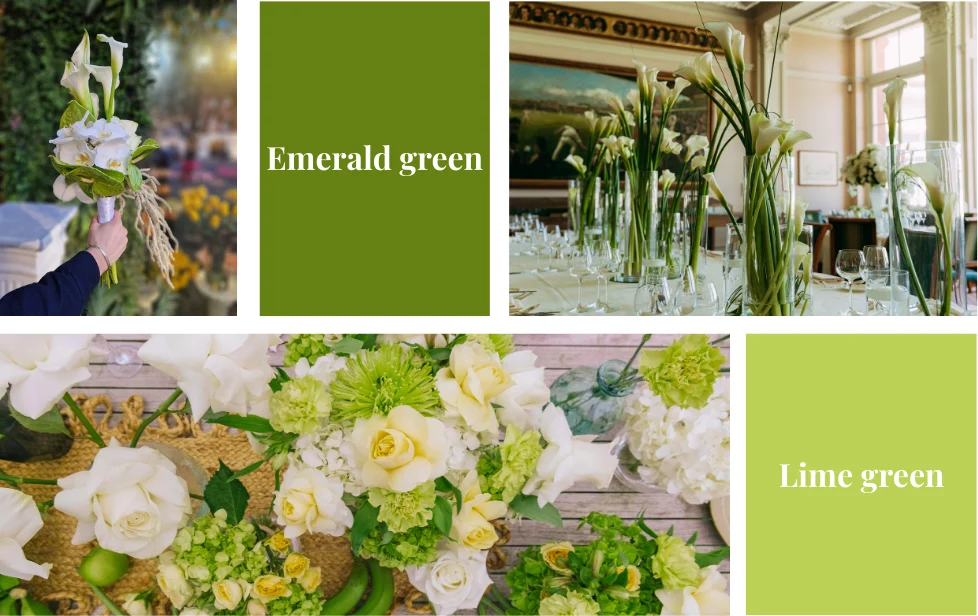
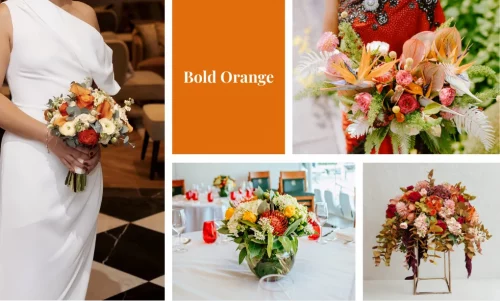
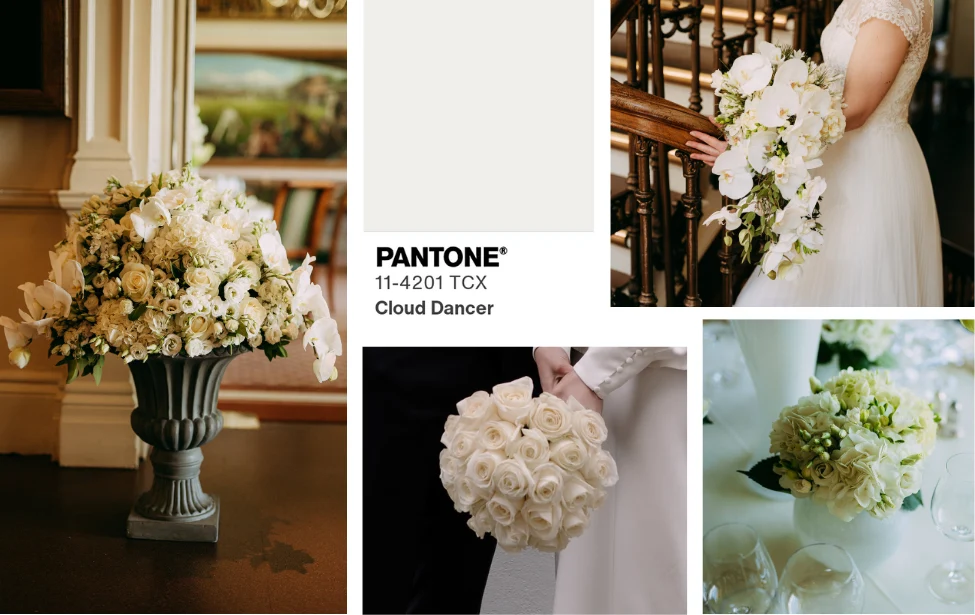
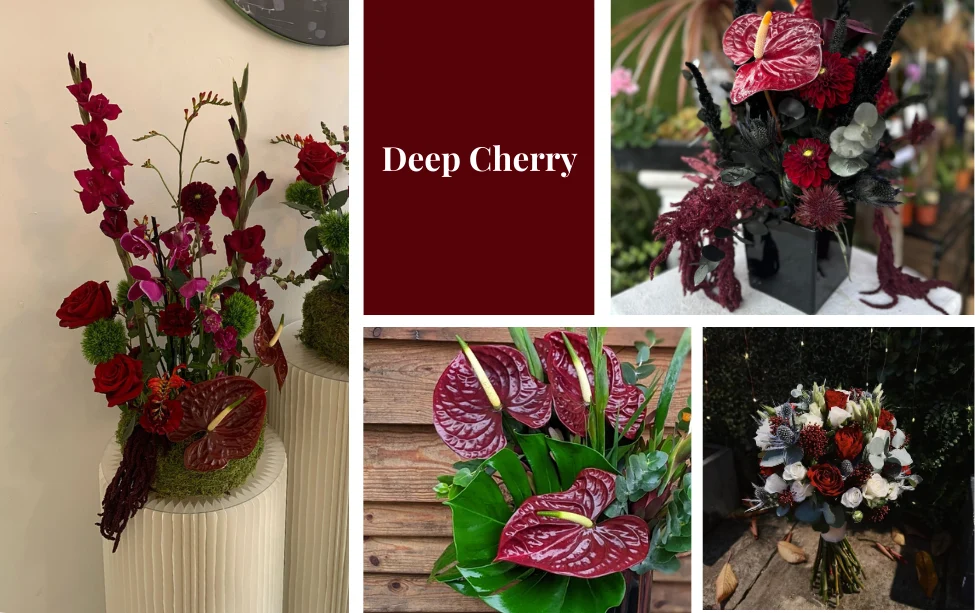
One palette Flower Station is exploring for 2026 wedding flowers brings together a soft off-white foundation, a rich deep red, emerald and lime greens, and a bold orange accent. Each shade contributes something different, from calm and lightness to depth, freshness and warmth. The same approach can be applied to almost any colour story, including soft tonal schemes, classic neutrals and brighter combinations.
4. Bring the Palette to Life Through Shape and Movement
Colour creates the framework, while the character of the design comes through the flowers themselves. Full-headed blooms can provide generous focal points, lighter stems bring air and movement, and trailing or sculptural varieties help shape the arrangement. Combining these forms gives the finished flowers depth and stops the palette from appearing flat.
Availability is part of this process too. If a particular variety is unavailable, an experienced florist can preserve the intended mood by selecting an alternative with a similar shape, texture or tone. Keeping the wider vision in mind allows the design to evolve without losing its identity.
5. Carry the Story Through the Day
Cohesion comes from repeating key colours, flowers and textures while giving each arrangement its own purpose. The bridal bouquet might hold the fullest expression of the palette, with selected details echoed in the buttonholes, ceremony flowers and table centrepieces.
Scale also changes across the day. An entrance arrangement needs enough presence to frame the space, while flowers placed on dining tables have to work comfortably around place settings and conversation. Your florist may also be able to move selected ceremony arrangements into the reception, giving important designs a second setting and making thoughtful use of the floral budget.
Planning the full journey in advance helps the flowers feel connected from the moment guests arrive through to the final part of the reception. It also allows the florist to coordinate installation, movement and timing with the venue team behind the scenes.
Final Thoughts
The most memorable wedding flowers feel connected to both the couple and their surroundings. When the atmosphere, venue, season, colour and choice of blooms are considered together, the result is a floral story that flows naturally through the day and photographs beautifully along the way.
If you are beginning to collect ideas, look for the colours, textures and feelings that appear repeatedly in the images you save. Those details will give your florist a valuable starting point for creating something that feels entirely your own.
Flower Station has been designing bespoke wedding flowers since 2002, working with couples from their initial consultation through to full venue styling. Find out more at flowerstation.co.uk.