While shopping for boys’ suits, there are a few considerations to keep in mind. Of course, knowing the fabric’s type and fit tells you how comfortable the young wearer will be. But only by taking into account these characteristics alongside the suit’s maintenance and care would you get the most out of your investment.
If you’re choosing a page boy suit, ring bearer outfit, junior groomsman suit, or an outfit for a young wedding guest, this post is for you. Our article focuses on the selection of the right fabric and fit with key maintenance tips that extend the suit’s longevity and comfort.
Boys Suit Fabrics Explained: What to Know Before Choosing
Not all boys’ suits are created the same; the fabric’s fibres play a huge role in determining when it’s worn as well as the structure and drape. We’ll dive into the most common suit fabrics to help you make smart choices.
Wool
Wool remains unparalleled as the standard fabric in suiting. Favoured for its many qualities, it’s an ultimate choice for formal occasions. Breathable, durable, and naturally wrinkle-resistant—wool holds its shape, regulates body temperature, and has excellent drape.
Most suitable for: formal events and colder weather, with the exception of soft, lightweight weaves, which make it suitable for spring and summertime.
Cotton
The second most common choice for suits after wool, cotton has advantageous qualities (including its price point against wool’s). Cotton suits are soft, lightweight, and breathable, making them an ideal choice for casual and summer occasions. One drawback, however, is that they don’t hold shape like wool suits.
Most suitable for: semi-formal occasions and warmer weather celebrations.
Polyester Blends
This is a practical choice when shopping on a budget but still looking for durability and year-round wear of wool suits. Polyester-viscose blend suits offer durability, drape, and a wrinkle-resistant finish—as opposed to linen and cotton, which tend to crease easily. Being easier to maintain and less likely to crease makes them an ideal choice for active kids and party settings.
Most suitable for: formal functions and year-round wear.
Linen
One of the best materials for summer and high temperatures, linen is exceptionally lightweight and the most breathable natural fiber. keeps the young wearer feeling cool and breezy under the blazing sun. One drawback is that it creases easily, which makes it less ideal for more formal summer functions. However, the fashion world has embraced this trait as a distinguished feature, not a drawback. Linen is an ideal fabric for boys who require ease of movement, as it moves naturally with the body without any restrictions.
Most suitable for: casual and outdoorsy summer events.
No matter which fabric you select, try to aim for breathable linings and lightweight layers for active boys.
How to Choose the Right Fabric for the Occasion

Every wedding comes with its own setting, and the right fabric can help the young wearer stay comfortable throughout while still adhering to the dress code.
For formal weddings, structured fabrics like wool or poly-viscose blends are ideal. They hold their shape, photograph well, and elevate the overall look of the outfit. If the ceremony takes place during warmer months or in a more casual setting, lightweight blends or linen-cotton suits offer a more relaxed feel without affecting style.
For church weddings, lighter colours in breathable materials like soft cotton or wool blends strike the right balance between formality and comfort. For longer wedding days, durability becomes more important. Easy-care fabrics like stretch blends or wrinkle-resistant polyester mixes help ensure the young wearer stays sharp from the ceremony through to the reception.
As for relaxed outdoor or destination weddings, flexibility is key. Stretch suiting or machine-washable materials make it easier for kids to move around and enjoy the day without constant adjustment or wardrobe stress.
Suit Fit Types for Boys (and What Works for Each Body Type)
Slim Fit
Slim-fit suits have a narrower cut across the chest, shoulders, and waist, with tapered arms, legs, and a lower-rise waistline. This cut creates a sharp silhouette, brings modern style, and works well for formal events like weddings or communions.
Works best for: lean or athletic boys or those of shorter build, giving the illusion of height prominence.
Tailored Fit
Tailored-fit suits sit somewhere between slim and regular. Synonymous with the modern suit, a tailored-fit cut offers a moderate taper through the waist with light tapering in the arms and legs. It offers a clean shape without being too snug, as it leaves some space in the shoulders. Comfort and style are well balanced in this fit.
Works best for: boys of average build, tall boys, or those who have a bigger shoulder-to-waist ratio since the cut softens the shoulders and tapers slightly at the waist.
Regular Fit
Regular-fit suits are looser in the chest and shoulders as well as the waist. This doesn’t mean they’re boxy; it is simply a classic and relaxed style for everyday use. Regular fit is ideal for long days or when comfort is especially important.
Works best for: stockier or broader boys, or active children who need more space to move freely.
Husky Fit
Husky-fit suits are designed with extra room through the chest, waist, hips, and thighs while still keeping the proportions of the jacket and trousers balanced. They are a useful alternative to simply sizing up, which can leave sleeves or trouser legs too long when additional width is the main requirement.
Works best for: broader or stockier boys who need more room through the body without compromising the overall fit and shape of the suit.
When you’re selecting a suit for a page boy, ring bearer, or young wedding guest, look at what works best with the body type. Slim fits suit lean builds and make the outfit feel more formal. Tailored fits offer flexibility for average builds, tall boys, and everyday wear. Regular fits give comfort and ease. Opt for a slightly looser fit if you expect growth or want room to alter later.
Growth Room & Alteration Tips
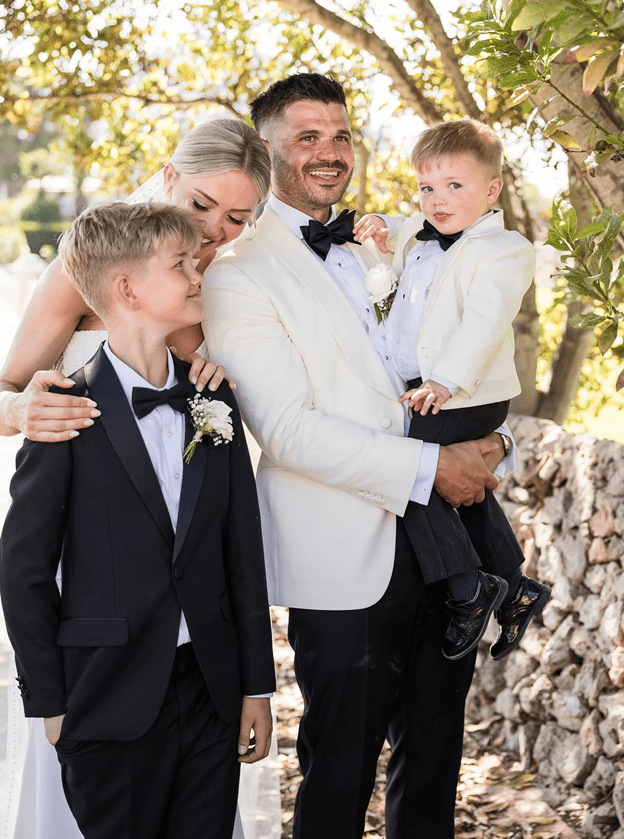
When buying a suit, size up wisely. If the boy is between sizes, go for the larger size. Growth room ensures the suit lasts longer and may be altered later for a perfect fit.
Signs of a good fit include a jacket that sits flat at the shoulders without pulling, sleeves that end at the wrist bone, and trousers that hang straight without bunching. If the shoulders are tight or buttons pull, it is too small. If the jacket looks boxy or the sleeves are long, it may be too large.
Minor alterations such as shortening sleeves or hemming trousers are often worthwhile. But extensive tailoring to reduce width or reshape a jacket can be costly. Weigh the cost of alterations against buying new. When in doubt, choose a fit that allows easy tailoring rather than one that requires extensive adjustments.
How to Care for a Boys’ Wedding Suit (So It Lasts More Than One Event)
Children grow fast, but that doesn’t mean their formalwear should be used once. With proper care and maintenance, a boys’ suit can be worn across a season of celebrations without looking worn or tired.
Cleaning Dos and Don’ts:
- Do spot-clean any minor stains right away with a gentle detergent and water. Always test on a hidden area first.
- Do hang the suit up immediately after wear to air it out before storing.
- Don’t toss the suit in the washing machine unless the label says it’s machine washable. Most wool blends and lined suits are not.
- Don’t dry clean after every wear. Excessive dry cleaning wears down fibers and fades colour. Once or twice a season is usually enough unless it’s visibly dirty.
- Do dry clean before long-term storage or if the suit has been heavily soiled. Always use a trusted cleaner who knows how to work with children’s tailoring.
Storing Suits Properly:
- Use a wide, structured hanger to support the suit jacket’s shoulders. This helps maintain the shape.
- Store trousers on a clip hanger or fold them along the crease and drape them over the bar of the same hanger.
- Use a breathable garment bag (not plastic) if the suit is being stored long-term. This protects it from dust while letting it breathe.
- If you’re packing the suit for travel, fold carefully along the natural lines and stuff tissue inside the jacket to prevent crushing.
Wrinkle Prevention and Fabric Care:
- Use a garment steamer to gently remove creases. Steaming is safer than ironing for most formal fabrics.
- If you need to iron, always check the fabric care label first. Use a pressing cloth to avoid scorching, and keep the iron on a low setting.
- Hang the suit in a steamy bathroom for 10 minutes if you’re in a pinch and don’t have a steamer.
Make the Suit Work for You
A boys’ wedding suit doesn’t have to be designed for just one occasion. Selecting it thoughtfully makes a world of difference in its wearability. When you take the time to understand the fabric, fit, and care instructions, it can last through a season full of milestones, photoshoots, and celebrations.
Whether it’s a sharp wool blend for a winter wedding or a soft, breathable set for a summer ceremony, the goal is the same: comfort, confidence, and style that lasts.
Need help figuring out what to choose? At SIRRI, we offer a range of thoughtfully designed pieces in our boys suits collection made with quality fabrics and real-life occasions in mind, including size guides, mix-and-match sets, and all-in-one suit options that take the stress out of shopping. Because dressing the youngest members of the wedding party should feel special, not stressful.
by SIRRI
SIRRI Wedding Suits & Page Boy Outfits – Tie The Knot Wedding Directory


